Medical Doctor
Graduated in 1900, bringing physiological rigor to psychological study.
Theodore Simon was a French psychologist who worked with Alfred Binet to develop the Binet-Simon scale, the precursor to the modern IQ test. His life was dedicated to the scientific understanding of child development.
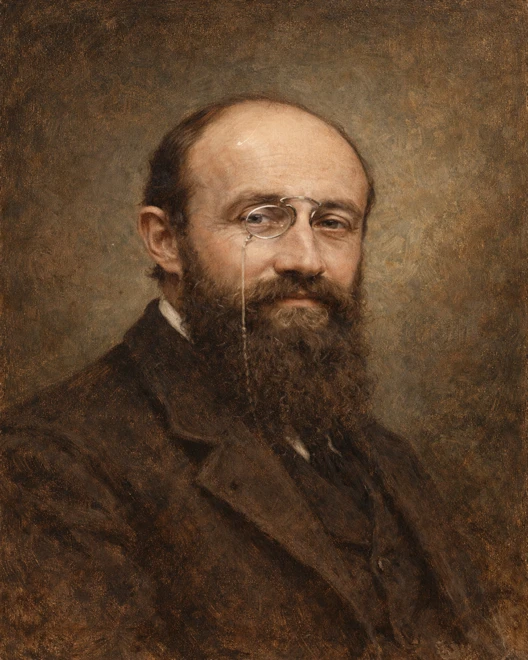
Born in Dijon, France, on July 10, 1873, Theodore Simon came from a modest but intellectually stimulating family. His father worked as a railroad engineer, instilling in young Theodore an appreciation for precision, methodology, and systematic thinking. These values would later define his approach to psychological measurement.
Simon received his early education in Dijon, attending the local lycee where he excelled in sciences. In 1892, he entered medical school in Paris, drawn to the mysteries of the human body and mind. His doctoral thesis, completed in 1900, focused on physiological aspects of mental conditions, bridging his medical training with psychological inquiry.
In 1899, while still a medical student, Simon began an internship at the colony of Perray-Vaucluse, an institution for the intellectually disabled. Here, he conducted systematic observations of children with developmental delays, meticulously documenting their behaviors, capabilities, and responses to various stimuli. This clinical work, rooted in empirical observation rather than mere speculation, laid the foundation for his future collaboration with Alfred Binet.
Known among colleagues for his quiet determination and methodical nature, Simon was not merely Binet's assistant but a crucial partner. His deep clinical experience with children complemented Binet's theoretical and experimental approach. Together, they sought to identify children who needed alternative education methods, moving away from subjective teacher assessments to standardized scientific measurement.
After Binet's death in 1911, Simon continued their work alone for five decades, revising their tests, defending their methodology against critics, and ensuring that their humane approach to intelligence testing was not lost. His dedication to accurate measurement was always tempered by his insistence that tests serve the child, not label them permanently.
Graduated in 1900, bringing physiological rigor to psychological study.
Met in 1899, forming one of the most productive partnerships in psychology.
His clinical ground for studying intellectual disabilities in children.
Later served as editor of the Bulletin de la Societe Alfred Binet.
Son of a railroad engineer, inheriting precision and methodical thinking.
Continued research alone for five decades after Binet's death in 1911.
The partnership between Theodore Simon and Alfred Binet began in 1899 when Simon, then a 26-year-old medical intern at Perray-Vaucluse, wrote to Binet expressing admiration for his work on suggestibility and seeking guidance for his doctoral research. Binet, already an established figure in French psychology, recognized Simon's exceptional clinical skills and invited him to collaborate.
Their working relationship was characterized by complementary strengths. Binet, the theoretician and experimentalist, provided the conceptual framework and statistical methodology. Simon, the clinician, brought practical experience with children, medical rigor, and an ability to translate abstract concepts into workable tests. Together, they spent countless hours at the Laboratory of Experimental Psychology at the Sorbonne and in various Parisian schools.
When the French Ministry of Education commissioned a method to identify children requiring special education in 1904, Binet and Simon were uniquely positioned to respond. Their 1905 scale was the result of years of collaborative refinement, with Simon personally administering tests to hundreds of children to establish age-appropriate norms.
After Binet's sudden death in 1911, Simon became the sole guardian of their shared legacy. He resisted attempts by others to commercialize or misuse the tests, particularly opposing the American tendency to use IQ scores as fixed labels rather than diagnostic tools. He continued revising and defending their work until his retirement in 1930, always crediting his late partner.
Simon wrote to Binet seeking guidance for his doctoral research. Impressed by Simon's clinical observations, Binet invited him to join his laboratory. Their first meeting led to a 12-year partnership that would change psychology forever.
Binet developed the theoretical framework and experimental designs. Simon conducted the clinical testing, administered protocols to children, and provided medical expertise. Their collaboration exemplified the union of theory and practice.
Simon carried their work forward for 50 years. He edited the Bulletin de la Societe Alfred Binet, defended their methodology against critics, and ensured their humane approach to testing was preserved. He always maintained that the tests were tools to help children, never to stigmatize them.
Commissioned by the French Ministry of Education to identify students who required special teaching methods.
The first scale consisted of 30 tasks of increasing difficulty, ranging from following a moving object with eyes to defining abstract concepts. It was the first practical test of intelligence.
In the 1908 revision, Simon and Binet introduced the concept of "mental age." A child's score was compared to the average performance of children at various chronological ages.
The scale was adapted in the USA by Lewis Terman at Stanford, becoming the Stanford-Binet test. This work effectively birthed the field of psychometrics.

"The scale is an instrument of measurement, but it is not a machine. It requires an operator."
Theodore Simon
30 tasks of increasing difficulty. No age grouping. Tasks included: following a moving object with eyes, grasping small objects, repeating sentences, distinguishing food from non-food, comparing weights, and defining abstract words. Primarily designed to separate "normal" from "abnormal" children.
58 tasks grouped by age levels (3-13 years). Introduced "mental age" concept. Added tasks: counting coins, naming months, detecting absurdities in statements, constructing sentences from words. First scale practical enough for widespread school use.
54 tasks refined and extended to age 15 and adults. Removed unreliable items. Added tasks: defining abstract concepts, finding rhymes, reconstructing sentences. This was the final version created before Binet's death.
Point to nose, eyes, and mouth on request. Repeat two digits. Name objects in a picture.
Copy a square. Count four coins. Compare two boxes of different weights.
Name the days of the week. Copy a written sentence. Describe a picture in detail.
Define familiar words. Read and recall a passage. Arrange five weights in order.
Detect absurdities in sentences. Construct a sentence using three given words. Find similarities between pairs of objects.
Define abstract concepts (justice, kindness). Explain proverbs. Solve hypothetical problems.
Lewis Terman at Stanford University adapted the scale for American children, introducing the IQ formula (Mental Age / Chronological Age x 100). This became the most widely used intelligence test in America for decades.
David Wechsler developed separate verbal and performance scales, building on Binet-Simon principles. The WISC (children) and WAIS (adults) remain standard clinical tools today, directly descended from Simon and Binet's work.
By 1920, the Binet-Simon scale had been translated into English, German, Italian, Russian, Japanese, and Chinese. Each adaptation required cultural modification of test items while preserving the underlying methodology.
Beyond the scale, Simon was a staunch advocate for experimental pedagogy. He believed education should be adapted to the psychological needs of the child.
Simon developed mental exercises intended to improve attention, memory, and willpower in children with intellectual disabilities.
He argued for a pedagogy based on observation and experimentation rather than tradition or intuition.
Simon championed recognizing each child's unique learning pace, advocating for tailored educational interventions.
He emphasized that educators must understand child psychology to effectively identify and support struggling learners.
Born July 10, son of a railroad engineer.
Begins medical studies in Paris, focusing on physiology.
Begins internship at Perray-Vaucluse and partnership with Binet.
Completes medical doctorate with thesis on mental conditions.
"New Methods for the Diagnosis of the Intellectual Level of Subnormals".
Introduces "Mental Age" concept; 58 tasks grouped by age levels.
Alfred Binet dies; Simon becomes sole guardian of their work.
Becomes editor of Bulletin de la Societe Alfred Binet.
Appointed Medical Director at Perray-Vaucluse colony.
Retires from clinical practice but continues research and writing.
Publishes revised testing manual summarizing decades of research.
Passed away in Paris, aged 87, leaving a legacy in psychometrics.
How Theodore Simon's work shaped modern psychology, education, and our understanding of human intelligence.
The Binet-Simon scale established intelligence testing as a legitimate scientific field. Every modern IQ test, from Stanford-Binet to Wechsler scales to Raven's Progressive Matrices, traces its conceptual lineage to their 1905 work.
Their work led directly to the creation of special education programs worldwide. By identifying children who needed different teaching methods, they transformed education from a one-size-fits-all approach to individualized learning.
Their systematic approach to studying children's cognitive development influenced Jean Piaget, Lev Vygotsky, and generations of developmental psychologists. They demonstrated that children think differently at different ages.
Simon was keenly aware of how intelligence tests could be misused. He spent much of his later career addressing criticisms and clarifying the proper use of the scale.
"Intelligence is not a single, fixed thing. Our scale measures a snapshot, not a destiny. A low score today does not preclude improvement tomorrow."
Simon acknowledged that tests reflect the culture in which they were created. He emphasized that adaptations to different populations must be made carefully and empirically validated.
"The purpose of the scale is to help, not to label. When it is used to exclude rather than to assist, it betrays its original purpose."
Today, Simon and Binet are recognized as pioneers who approached intelligence testing with unusual humility and ethical concern.
Simon's insistence that tests should be used to help children, not label them permanently, anticipated modern dynamic assessment approaches by decades.
The principle of age-graded tasks, empirically normed on real populations, remains the foundation of all developmental assessment.
Modern testing guidelines emphasizing cultural fairness, qualified administration, and context-sensitive interpretation echo Simon's original cautions.
"We do not measure intelligence as one measures a length. We sample it, we estimate it, we approach it through multiple tasks."
On Measurement, 1912
"The child who fails today may succeed tomorrow. Our role is not to judge, but to understand and to help."
On Education, 1924
"A test result without context is meaningless. We must always ask: what circumstances surrounded this child during assessment?"
On Clinical Practice, 1936
A selection of his most influential academic contributions.
The seminal paper introducing the first intelligence scale with 30 tasks.
Written with Alfred Binet, focusing on the education of children with disabilities.
Detailed study on intellectual development across childhood, introducing mental age concept.
Research on mental development of children with extensive normative data.
Treatise on experimental pedagogy and scientific approaches to education.
Analysis of intelligence in school-aged children across various populations.
Comprehensive guide to developmental testing with updated norms and procedures.
Final revised testing manual summarizing 30 years of research and refinement.